
Is Tirzepatide Noninferior to Dulaglutide for Cardiovascular Outcomes?
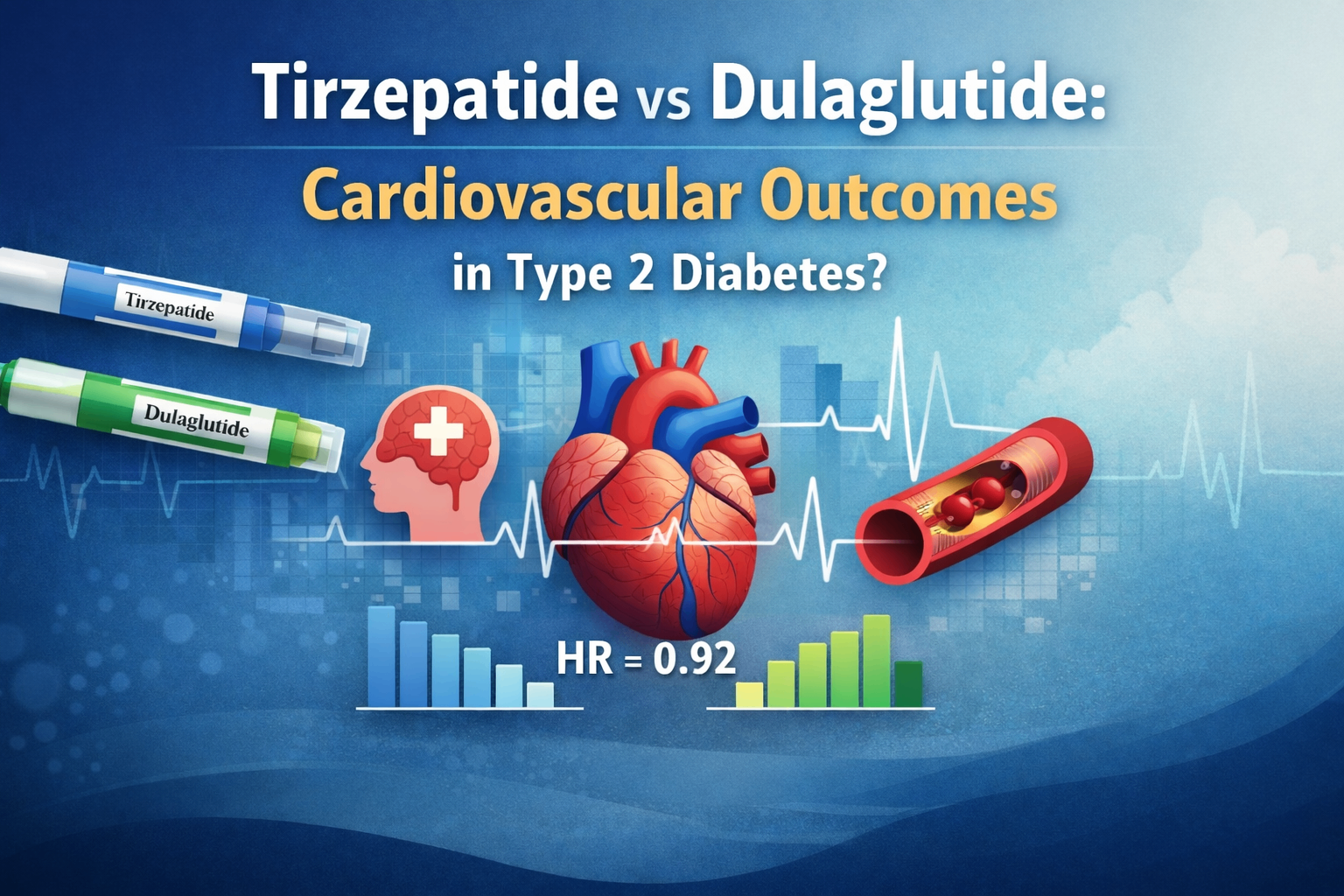
Yes. Available cardiovascular outcomes trial (CVOT) evidence indicates that tirzepatide is noninferior to dulaglutide with respect to major cardiovascular outcomes in adults with type 2 diabetes and established atherosclerotic cardiovascular disease.
Event rates for major adverse cardiovascular events were comparable between the two agents, supporting a similar cardiovascular safety profile. For readers seeking to explore cardiovascular outcomes trials and compare evidence across incretin-based therapies, PubMed.ai provides structured access to peer-reviewed biomedical literature with AI-assisted summaries for efficient research review.
Is Tirzepatide Noninferior to Dulaglutide for Cardiovascular Outcomes?
Why Cardiovascular Outcomes Are Central in Type 2 Diabetes Research
Type 2 diabetes (T2D) is strongly associated with an increased risk of cardiovascular disease, particularly among individuals with long-standing diabetes and pre-existing atherosclerotic cardiovascular disease (ASCVD).
Key reasons cardiovascular outcomes are a major focus in diabetes research include:
- Cardiovascular disease remains a leading cause of morbidity and mortality in T2D
- Regulatory agencies require cardiovascular safety evaluation for new glucose-lowering agents
- Incretin-based therapies are increasingly assessed beyond glycemic endpoints
As a result, head-to-head CVOTs comparing newer agents such as tirzepatide with established glucagon-like peptide-1 receptor agonists (GLP-1 RAs) are of substantial scientific interest.
Overview of Tirzepatide and Dulaglutide
| Characteristic | Tirzepatide | Dulaglutide |
|---|---|---|
| Pharmacologic class | Dual GIP/GLP-1 receptor agonist | GLP-1 receptor agonist |
| Administration | Once-weekly subcutaneous injection | Once-weekly subcutaneous injection |
| Indicated population | Adults with type 2 diabetes | Adults with type 2 diabetes |
| CVOT comparison | Active-comparator vs dulaglutide | Active-comparator vs tirzepatide |
Study Design and Participant Characteristics
The noninferiority findings are derived from a randomized, double-blind, active-controlled cardiovascular outcomes trial conducted in a high-risk population.
Key design features:
- Total participants: 13,299
- Population:
- Type 2 diabetes
- Established atherosclerotic cardiovascular disease
- Mean age: 64.1 years
- Mean diabetes duration: 14.7 years
- Randomization: 1:1 allocation
- Follow-up: Long-term assessment of cardiovascular outcomes
The large sample size and inclusion of participants with established ASCVD enhance the robustness and generalizability of the findings.
Cardiovascular Outcomes and Noninferiority Findings
Primary Endpoint
The primary outcome was **major adverse cardiovascular events (MACE)**, defined as a composite of:
- Cardiovascular death
- Myocardial infarction
- Stroke
Results Summary
- Hazard ratio (tirzepatide vs dulaglutide): 0.92
- Interpretation:
- Event rates were similar between treatment groups
- The confidence interval met prespecified criteria for noninferiority
These results indicate that tirzepatide demonstrated noninferiority to dulaglutide with respect to major cardiovascular outcomes.
Safety Profile and Adverse Events
Overall adverse event rates were comparable between the two study groups.
Observed safety patterns included:
- Overall adverse events: Similar incidence
- Gastrointestinal events:
- Reported more frequently in the tirzepatide group
- Consistent with known effects observed in incretin-based therapies
No unexpected safety signals related to cardiovascular outcomes were identified during the trial.
Implications for Cardiovascular Outcomes Research
The findings contribute to the broader evidence base evaluating cardiovascular safety among glucose-lowering therapies.
Key considerations include:
- Confirmation of cardiovascular safety relative to an established GLP-1 receptor agonist
- Support for comparative assessments within incretin-based pharmacologic classes
- Alignment with regulatory expectations for cardiovascular outcomes evaluation
Importantly, the trial was designed to assess noninferiority, and conclusions should be interpreted within this predefined framework.
Regulatory Context and Ongoing Research
- The trial design and outcomes align with regulatory requirements for cardiovascular safety assessment in type 2 diabetes therapies
- Ongoing and future analyses may further examine:
- Extended follow-up periods
- Additional cardiovascular or metabolic endpoints
- Broader and more diverse study populations
Such research will continue to refine the understanding of cardiovascular outcomes associated with dual and single incretin receptor agonists.
Conclusion
Current CVOT evidence indicates that tirzepatide is noninferior to dulaglutide for major cardiovascular outcomes in adults with type 2 diabetes and established atherosclerotic cardiovascular disease.
Both agents demonstrated comparable cardiovascular safety profiles, with differences primarily observed in non-cardiovascular adverse event patterns.
These findings add to the growing body of literature evaluating cardiovascular outcomes within incretin-based therapies.
References
- Cardiovascular Outcomes with Tirzepatide versus Dulaglutide in Type 2 Diabetes
- Comparison of Tirzepatide and Dulaglutide on Major Adverse Cardiovascular Events: SURPASS-CVOT Design and Baseline Characteristics
- Overview of GLP-1 Agonists and Recent Cardiovascular Outcomes Trials
- Antidiabetic Agents and Cardiovascular Outcomes in Patients with Heart Disease
Explore More with PubMed.ai
For readers who want to explore cardiovascular outcomes trials in greater depth, compare study designs, or review original evidence across incretin-based therapies, PubMed.ai offers AI-assisted access to peer-reviewed biomedical literature, helping streamline literature discovery, interpretation, and research synthesis.
Disclaimer:
This AI-assisted content is intended for academic reference and informational purposes only and does not constitute medical advice, diagnosis, or treatment. Always consult qualified healthcare professionals regarding any medical condition or treatment decisions. All risks arising from reliance on this content are borne by the user, and the publisher assumes no responsibility for any decisions or actions taken.

Have a question about medical research, clinical practice, or evidence-based treatment? Access authoritative, real-time insights: PubMed.ai is an AI-Powered Medical Research Assistant.
Your AI Medical Update
Subscribe to our free Newsletter