QID Medical Abbreviation: Meaning
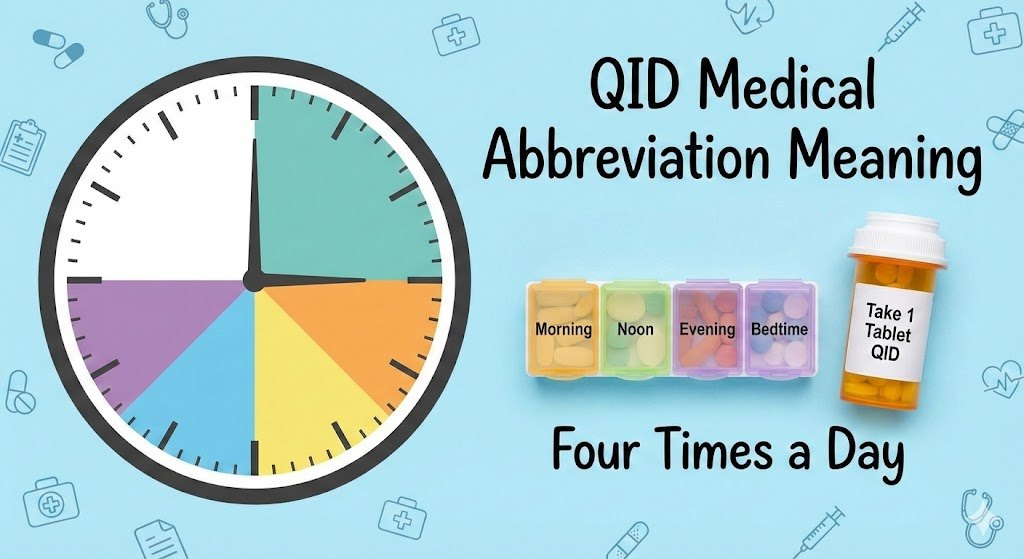
QID stands for quater in die, meaning “four times a day.”
This AI-assisted content is intended for academic reference and informational purposes only and does not constitute medical advice, diagnosis, or treatment. Always consult qualified healthcare professionals regarding any medical condition or treatment decisions. All risks arising from reliance on this content are borne by the user, and the publisher assumes no responsibility for any decisions or actions taken.
Explore More with PubMed.ai
If you want to quickly search, summarize, and organize biomedical literature, PubMed.ai is an invaluable tool. From extracting key study insights to generating structured research reports, PubMed.ai helps clinicians, researchers, and students save time while maintaining accuracy. Learn more at PubMed.ai.
What Does QID Mean in Latin and English?
QID is the abbreviation of the Latin term quater in die, literally “four times in a day.”
Why Do Latin Abbreviations Like QID Persist in Modern Prescriptions?
Latin abbreviations are retained in medicine for historical consistency, conciseness, and international recognition.
Explore More with PubMed.ai
If you want to quickly search, summarize, and organize biomedical literature, PubMed.ai is an invaluable tool. From extracting key study insights to generating structured research reports, PubMed.ai helps clinicians, researchers, and students save time while maintaining accuracy. Learn more at PubMed.ai.
FAQs
What is the full form of QID?
QID stands for quater in die, Latin for “four times a day.”
Where can I find reliable references for QID and other medical abbreviations?
Authoritative sources include NIH Clinical Glossaries, FDA labeling guidance, and peer-reviewed journals indexed on PubMed.
Disclaimer:
This AI-assisted content is intended for academic reference and informational purposes only and does not constitute medical advice, diagnosis, or treatment. Always consult qualified healthcare professionals regarding any medical condition or treatment decisions. All risks arising from reliance on this content are borne by the user, and the publisher assumes no responsibility for any decisions or actions taken.

Have a question about biomedical research or published clinical studies? PubMed.ai helps you explore published biomedical literature with AI assistance.
Subscribe to our free Newsletter